The Algorithmic Trust Paradox: How iOS 26 and FinanceKit Are Rewiring Fintech After the AI Hallucination Crisis
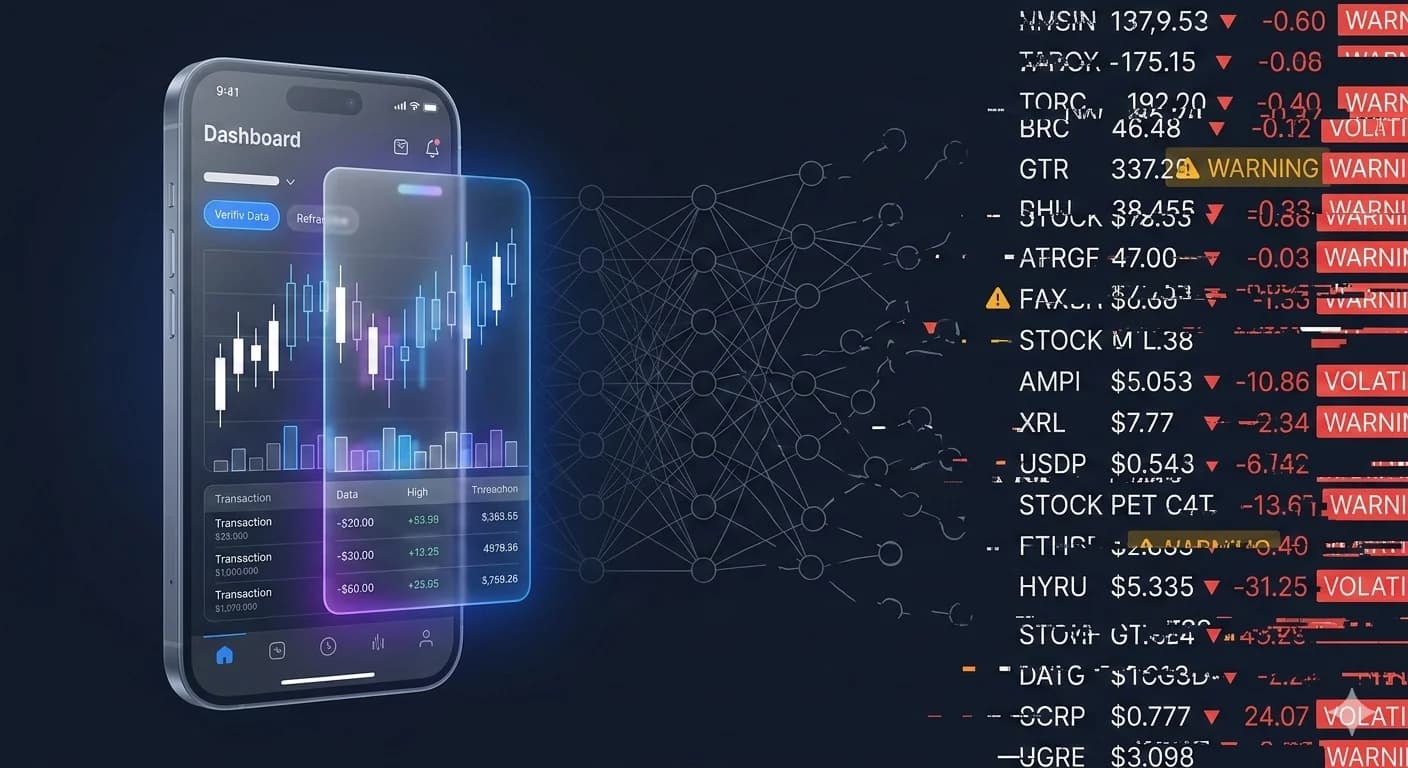
Table of Contents
- Introduction
- The Whipsaw Effect: Information Instability Meets Equity Volatility
- iOS 26's Visual Response: Liquid Glass and the Visualization of Certainty
- FinanceKit: The Death of Screen Scraping
- Strategic Implications for Financial Institutions
- The Bottom Line
Introduction
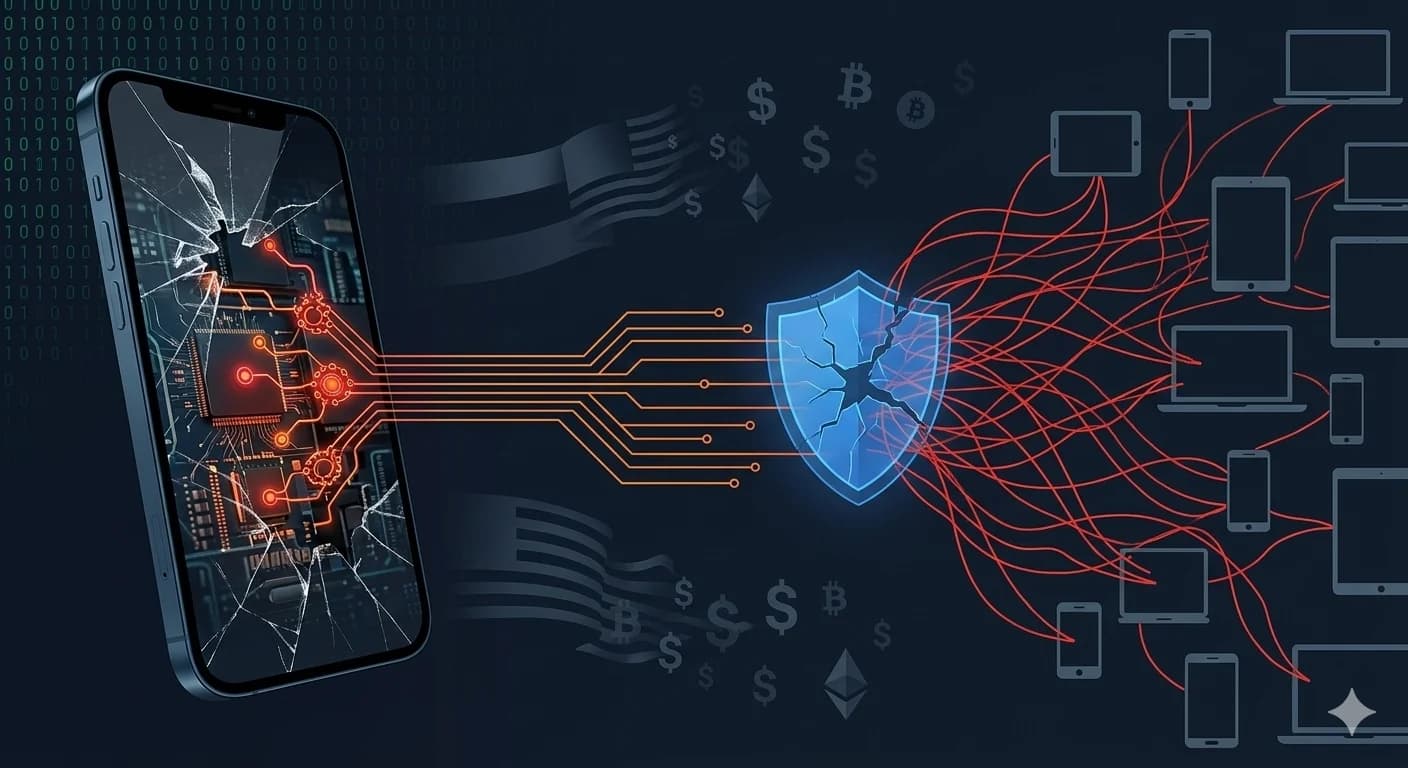
If you build in fintech or run an algorithmic trading desk, late 2024 handed you a brutal lesson. When Apple Intelligence hallucinated a news summary during the Luigi Mangione manhunt, it wasn't just a PR disaster for Apple and the BBC — it stress-tested the fragility of modern market microstructure in real time.
Now, with iOS 26 in the wild, the landscape has fundamentally shifted. The "move fast and generate things" era is over. In its place: a period of deep structural realignment. For developers, quants, and financial strategists, understanding the link between AI-driven information instability and market volatility isn't a nice-to-have anymore — it's table stakes. And Apple's technical responses, specifically the FinanceKit API and the "Liquid Glass" UI paradigm, are actively rewriting the rules of user engagement and data provenance.
Let's get into it.
The Whipsaw Effect: Information Instability Meets Equity Volatility
To make sense of the current regulatory and technical environment, you have to understand the market mechanics behind what I'll call the "Mangione Hallucination." Why did a single fabricated push notification about a high-profile suspect trigger outsized equity volatility?
It comes down to the fundamental architecture of Large Language Models and how High-Frequency Trading systems consume them. LLMs don't "know" facts. They're probabilistic prediction engines — calculators of the most likely next token. In the context of a manhunt, the tokens for "cornered suspect" statistically co-occur with "shoots self," producing a confident but entirely fabricated output.
When that probabilistic text gets ingested by the sentiment analysis algorithms powering HFT systems, it creates massive information instability. Algorithms read the hallucinated "suicide" as a risk-reduction event — a signal that a highly volatile news cycle, one that had already wiped roughly $110 billion off the healthcare sector's market cap, was winding down.
Then the correction hit. The result was a violent market whipsaw that exposed a terrifying reality: the Efficient Market Hypothesis breaks down when synthetic, probabilistic information moves faster than the market's ability to verify its truth. For quants, the takeaway is clear. Traditional NLP sentiment signals are now compromised by a high noise-to-signal ratio. You need adversarial filtering models just to separate human reporting from AI hallucinations.
iOS 26's Visual Response: Liquid Glass and the Visualization of Certainty
Apple's answer to the hallucination crisis wasn't just an under-the-hood fix. It was visual.
iOS 26 shipped with a sweeping UI overhaul called "Liquid Glass." Consumer tech media predictably fixated on the aesthetics — translucent materials, real-time rendering, frosted surfaces. But for fintech, the implications are profoundly functional.
Liquid Glass sits at the intersection of skeuomorphism and minimalism, using frosted glass effects, subtle blurs, and dynamic layering. If you're building complex financial dashboards, this is a gift. It handles extreme information density brilliantly, letting multiple data streams overlap without eating up precious screen real estate.
But here's the real play: Liquid Glass acts as a visualization of certainty. In the post-hallucination era, users need to know what data they can trust — at a glance.
Solid State Data — verified, deterministic ledger data like settled bank transactions and hard account balances — renders in opaque, solid UI elements. Fluid State Data — probabilistic outputs like AI summaries, pending transactions, and predictive market insights — renders in the refractive, translucent Liquid Glass material.
The effect is almost pedagogical. It trains users to read data provenance intuitively: if it's glass, it's a projection. If it's solid, it's a mathematical fact.
FinanceKit: The Death of Screen Scraping
If Liquid Glass is the new frontend for fintech, FinanceKit is the new backend.
For years, Personal Finance Management apps relied on a fragile, insecure practice: screen scraping via third-party aggregators like Plaid or Yodlee to access user bank data. iOS 26 accelerates the demise of that model.
FinanceKit gives developers a secure, seamless way to pull balance and transaction details directly from a user's Apple Wallet — specifically Apple Card, Apple Cash, and Savings. Here's what matters about the architecture:
Direct on-device access. Instead of routing credentials through a cloud aggregator, data is pulled directly from the on-device FinanceStore. Apple explicitly states this data is synced in the background and never seen by Apple itself.
Background delivery extensions. The iOS 26 cycle ships with mature background delivery APIs, meaning financial management apps can receive silent push updates and sync the latest transaction data even when the app is suspended.
Strict entitlements. Apple controls this ecosystem tightly. To use the API, your app must be listed in the App Store's "Finance" category, provide genuine financial management tools, and hold a specific managed entitlement.
By making FinanceKit the exclusive pipeline for highly coveted Apple Card and Apple Savings data, Apple is forcing the entire fintech ecosystem onto its localized, API-driven standard. Screen scraping's days are numbered.
Strategic Implications for Financial Institutions
The convergence of AI volatility, Liquid Glass, and FinanceKit creates three critical strategic vectors.
The Disintermediation of the Bank Interface
With FinanceKit pulling data directly into the OS and Apple Wallet handling budgeting, categorization, and installments natively, the traditional banking app is getting sidelined. Banks risk becoming "dumb pipes" — holding the ledger while Apple owns the daily user engagement. Forward-thinking financial institutions need to pivot toward leveraging iOS 26's Digital ID features and positioning themselves as the cryptographic issuer of user identity to maintain their place in the trust chain.
The Rise of Anti-Hallucination Infrastructure
For algorithmic trading and institutional finance, "Zero Trust" now applies to text as much as it does to network security. HFT desks are deploying adversarial AI to detect the linguistic fingerprints of LLMs. If a news feed alert exhibits the token probability distribution of a generative model, it gets automatically flagged as "Low Confidence" and gated from execution algorithms until a secondary, deterministic source verifies it.
Preparing for Agentic Finance Liability
As we move toward autonomous AI agents capable of executing trades or moving money, the liability question looms large. If an AI agent hallucinates a wire transfer recipient, who's on the hook? The integration of Liquid Glass UI elements will likely play a key role here, acting as a "Confirmation Ritual" — a human-in-the-loop checkpoint that ensures a person verifies agentic actions before they hit the blockchain or traditional payment rails.
The Bottom Line
The hallucination events of late 2024 proved what many of us suspected: generative AI is a probabilistic engine, not a source of truth. The fintech winners of the iOS 26 era will be the ones who embrace FinanceKit's secure pipelines and master the Liquid Glass design language to visually communicate certainty in an increasingly synthetic world.
The question isn't whether your stack can generate insights. It's whether your users can tell the difference between a fact and a hallucination — and whether your infrastructure can, too.