Decentralized Intelligence: Architecting Privacy-First SLM Solutions for the Industrial Edge
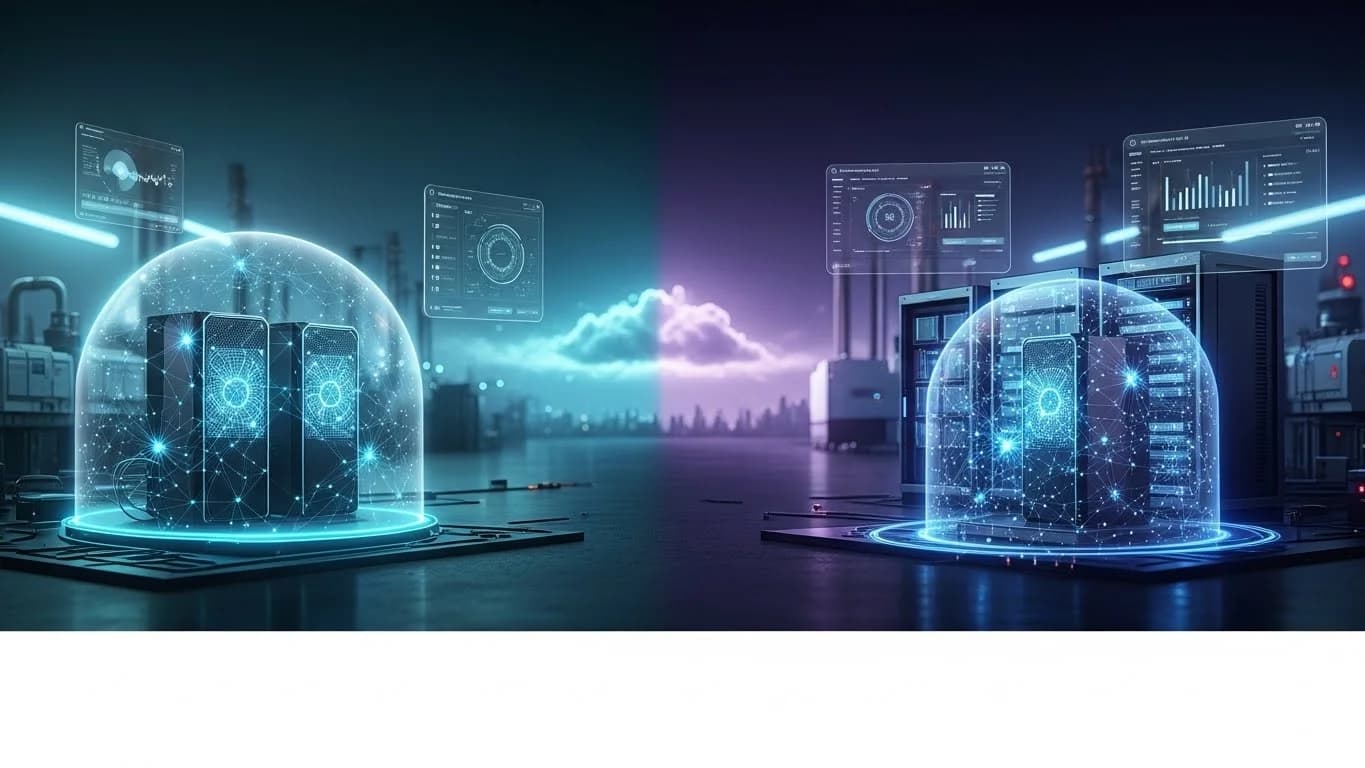
Table of Contents
- The Repatriation of Intelligence
- The "Small" in Small Language Models
- The Logic of Local: Why 8B is Enough
- Hardware: The NPU Revolution
- The Stack: Engineering Inference on the Edge
- Retrieval-Augmented Generation in Air-Gapped Zones
- Bridging OT and IT
- Security: The Air-Gap Lifecycle
- Conclusion
The Repatriation of Intelligence
For the better part of the last decade, "Industry 4.0" has been synonymous with the cloud. The prevailing architecture involved piping massive streams of telemetry from the shop floor to hyperscale data centers for processing. But for systems architects in manufacturing, energy, and defense, this model is hitting a wall defined by physics (latency), policy (data sovereignty), and pragmatism (costs).
We are witnessing a repatriation of intelligence. The maturation of Small Language Models (SLMs) in the 3B-14B parameter range has made it possible to run reasoning engines directly on the edge. This post serves as a technical blueprint for deploying local, privacy-first inference systems that operate without a single byte crossing the public internet.
The "Small" in Small Language Models
In the context of an industrial PC (IPC) or an embedded controller, "small" isn't just about parameter count—it's about memory bandwidth and thermal envelopes. We can categorize the current landscape into three distinct tiers of viability:
Model Tier Classification
| Tier | Parameter Range | Hardware Class | Use Case |
|---|---|---|---|
| Nano-scale | 0.5B - 2B | Raspberry Pi 5, low-power SBCs | Narrow tasks like log classification |
| Micro-scale | 3B - 8B | Modern IPCs (8-16GB RAM) | General reasoning, the "sweet spot" |
| Macro-scale | 10B - 32B | Edge servers (Jetson AGX Orin) | Complex multimodal tasks |
Nano-scale (0.5B - 2B): Models like Qwen2.5-0.5B or TinyLlama run on Raspberry Pi 5 class hardware. They are excellent for narrow tasks like classifying log entries but lack deep reasoning capabilities.
Micro-scale (3B - 8B): This is the sweet spot. Models like Llama 3.1 8B, Phi-4, and Qwen2.5 7B offer reasoning capabilities that rival older 70B models but fit comfortably within the 8GB-16GB RAM envelope typical of modern IPCs.
Macro-scale (10B - 32B): Reserved for high-end edge servers (e.g., NVIDIA Jetson AGX Orin). These models handle complex multimodal tasks but require 30W-60W+ TDP and active cooling.
Hardware Compatibility Matrix
| Hardware Class | RAM | TDP | Viable Models | Tokens/sec (est.) |
|---|---|---|---|---|
| Raspberry Pi 5 | 8GB | 5W | TinyLlama, Qwen2.5-0.5B | 5-10 |
| Intel NUC 13 | 16GB | 28W | Phi-4, Llama 3.1 8B (Q4) | 15-25 |
| Industrial IPC | 32GB | 45W | Llama 3.1 8B (Q8), Qwen2.5 14B | 20-40 |
| Jetson AGX Orin | 64GB | 60W | Llama 3.1 70B (Q4), multimodal | 50-150 |
The Logic of Local: Why 8B is Enough
Why settle for 8 billion parameters? Recent benchmarks suggest that for domain-specific tasks—like interpreting IEC 61131-3 structured text or analyzing sensor anomalies—fine-tuned SLMs often outperform larger generalist models. The Phi-4 series, for instance, supports context windows up to 128k tokens, allowing an edge device to ingest an entire technical manual in a single prompt.
Domain-Specific Performance
The key insight is that industrial applications don't need encyclopedic world knowledge—they need deep expertise in narrow domains:
- PLC Code Analysis: An 8B model fine-tuned on ladder logic and structured text can outperform GPT-4 on domain-specific debugging tasks
- Anomaly Detection: Smaller models trained on facility-specific sensor patterns achieve higher accuracy than general-purpose giants
- Technical Documentation: 128k context windows allow ingestion of complete equipment manuals without retrieval overhead
Hardware: The NPU Revolution
The hardware conversation is no longer just about discrete GPUs. 2025 has brought the "AI PC" architecture to the factory floor, characterized by the integration of Neural Processing Units (NPUs) into standard processors.
Platform Comparison
| Platform | Architecture | Performance (8B Model) | Power | Best Use Case |
|---|---|---|---|---|
| NVIDIA Jetson AGX Thor | Discrete GPU | ~150 TPS | 60W | Real-time robotics |
| Intel Core Ultra | Integrated NPU | ~15-20 TPS | 15W | Background analysis |
| Snapdragon X Elite | Integrated NPU | ~18-22 TPS | 23W | Mobile edge devices |
| AMD Ryzen AI | Integrated NPU | ~12-18 TPS | 15W | Cost-optimized deployments |
NVIDIA Jetson AGX Thor: The performance king. It delivers ~150 tokens per second (TPS) on Llama 3.1 8B. It's the choice for real-time robotics where millisecond latency is non-negotiable.
Intel Core Ultra & Snapdragon X Elite: The efficiency champions. While they push fewer tokens (15-20 TPS), they do so at a fraction of the power. For background tasks like log analysis or RAG queries, this efficiency is often more valuable than raw speed.
Throughput vs. Power Efficiency
The critical metric for industrial deployment is not raw throughput but tokens per watt:
| Platform | Tokens/sec | Power (W) | Tokens/Watt | Cost/Token (relative) |
|---|---|---|---|---|
| Jetson AGX Thor | 150 | 60 | 2.5 | 1.0x |
| Intel Core Ultra | 18 | 15 | 1.2 | 2.1x |
| Snapdragon X Elite | 20 | 23 | 0.87 | 2.9x |
For 24/7 industrial operations, the Jetson's superior tokens-per-watt ratio compounds into significant operational savings.
The Stack: Engineering Inference on the Edge
Deploying these models requires a shift from standard cloud stacks (Python/PyTorch) to highly optimized inference engines.
1. Quantization is Mandatory
You cannot run FP16 models on most edge devices due to memory bandwidth bottlenecks.
CPU Inference: Use GGUF format. The Q4_K_M quantization scheme is the industry standard, offering a negligible drop in reasoning accuracy while cutting memory usage by ~70%.
GPU Inference: Use AWQ (Activation-aware Weight Quantization). It preserves the precision of the top 1% "salient" weights, ensuring that 4-bit models don't lose their ability to follow complex instructions.
| Quantization | Format | Memory Reduction | Quality Loss | Best For |
|---|---|---|---|---|
| Q4_K_M | GGUF | ~70% | Minimal | CPU inference |
| Q5_K_M | GGUF | ~60% | Negligible | High-accuracy CPU |
| AWQ 4-bit | Safetensors | ~75% | Minimal | GPU inference |
| GPTQ 4-bit | Safetensors | ~75% | Low | GPU batch inference |
2. The Runtime
Llama.cpp has become the universal runtime. Written in pure C/C++, it bypasses heavy Python dependencies. For industrial Linux (often built with Yocto), compiling llama.cpp as a static binary avoids "dependency hell" on the target device.
Deployment Architecture:
┌─────────────────────────────────────────────────────────────┐
│                    EDGE DEVICE                               │
├─────────────────────────────────────────────────────────────┤
│  Application Layer                                           │
│  - REST API / gRPC interface                                │
│  - Input validation and sanitization                        │
├─────────────────────────────────────────────────────────────┤
│  Inference Runtime (llama.cpp)                              │
│  - Static binary, no Python dependencies                    │
│  - GGUF model loading                                       │
│  - Grammar-constrained decoding                             │
├─────────────────────────────────────────────────────────────┤
│  Hardware Abstraction                                        │
│  - CPU (AVX2/AVX512)                                        │
│  - GPU (CUDA/ROCm/Metal)                                    │
│  - NPU (OpenVINO/ONNX)                                      │
└─────────────────────────────────────────────────────────────┘
3. Structured Output (The Killer Feature)
In automation, a chatty AI is useless. You need valid JSON to trigger a PLC action. Using Grammar-Constrained Decoding (available in llama.cpp via GBNF grammars or libraries like outlines), we can force the model to output only valid JSON schema, preventing the "hallucinated syntax" errors that plague standard LLM interactions.
Example GBNF Grammar for PLC Commands:
root   ::= "{" ws "\"action\":" ws action "," ws "\"target\":" ws string "," ws "\"value\":" ws number ws "}"
action ::= "\"SET\"" | "\"GET\"" | "\"RESET\"" | "\"ALARM\""
string ::= "\"" [a-zA-Z0-9_.]+ "\""
number ::= [0-9]+ ("." [0-9]+)?
ws     ::= [ \t\n]*
This grammar guarantees the model outputs valid, parseable commands—no exceptions.
Retrieval-Augmented Generation in Air-Gapped Zones
An SLM is a reasoning engine, not a knowledge base. To make it useful, we need RAG. But how do you do RAG without the cloud?
The Architecture
We utilize embedded vector databases like LanceDB or SQLite-vss. Unlike Pinecone or Milvus, these run in-process and save data to local files. They allow us to index gigabytes of PDF manuals and historical maintenance logs directly on the device's SSD.
Air-Gapped RAG Stack:
┌─────────────────────────────────────────────────────────────┐
│                    QUERY PIPELINE                            │
├─────────────────────────────────────────────────────────────┤
│  1. User Query                                               │
│     └─> Embedding Model (all-MiniLM-L6-v2, local)           │
│                                                              │
│  2. Vector Search                                            │
│     └─> LanceDB / SQLite-vss (file-based, no network)       │
│                                                              │
│  3. Context Assembly                                         │
│     └─> Top-k chunks + original query                       │
│                                                              │
│  4. Inference                                                │
│     └─> SLM generates response with retrieved context       │
└─────────────────────────────────────────────────────────────┘
Vector Database Comparison
| Database | Deployment | Index Size Limit | Query Latency | Air-Gap Ready |
|---|---|---|---|---|
| LanceDB | Embedded | 100GB+ | <10ms | Yes |
| SQLite-vss | Embedded | 10GB | <5ms | Yes |
| Chroma | Embedded/Server | 50GB | <15ms | Yes |
| Pinecone | Cloud only | Unlimited | 50-100ms | No |
Bridging OT and IT
The real value unlocks when we bridge the Operational Technology (OT) layer. By running an OPC UA client alongside the embedding model, we can translate raw tags (e.g., PLC1.Temp = 98.4) into semantic strings ("Boiler 1 is approaching critical temp"). These semantic logs are embedded and stored, allowing operators to ask plain English questions like, "When was the last time the boiler temperature spiked like this?" and receive answers grounded in historical data.
OT-IT Integration Architecture
┌─────────────────────────────────────────────────────────────┐
│                    OT LAYER (Shop Floor)                     │
├─────────────────────────────────────────────────────────────┤
│  PLCs │ SCADA │ Sensors │ Actuators                         │
│       └───────────┬───────────┘                             │
│                   │ OPC UA / Modbus                         │
├───────────────────┼─────────────────────────────────────────┤
│                   │                                          │
│            ┌──────▼──────┐                                   │
│            │  OPC UA     │                                   │
│            │  Client     │                                   │
│            └──────┬──────┘                                   │
│                   │ Raw Tags                                 │
│            ┌──────▼──────┐                                   │
│            │  Semantic   │                                   │
│            │  Translator │  "PLC1.Temp=98.4" →              │
│            │             │  "Boiler 1 approaching critical"  │
│            └──────┬──────┘                                   │
│                   │                                          │
│            ┌──────▼──────┐                                   │
│            │  Embedding  │                                   │
│            │  + Storage  │                                   │
│            └──────┬──────┘                                   │
│                   │                                          │
│            ┌──────▼──────┐                                   │
│            │  SLM +      │  "When did boiler last spike?"   │
│            │  RAG Query  │  → Historical answer             │
│            └─────────────┘                                   │
├─────────────────────────────────────────────────────────────┤
│                    IT LAYER (Edge Server)                    │
└─────────────────────────────────────────────────────────────┘
Use Case Examples
| Query Type | Example | Data Source |
|---|---|---|
| Historical Analysis | "When did motor 3 last exceed vibration threshold?" | Embedded sensor logs |
| Troubleshooting | "What were the conditions before the last unplanned stop?" | Alarm history + process data |
| Documentation | "What's the maintenance procedure for conveyor belt replacement?" | Embedded PDF manuals |
| Anomaly Context | "Is this temperature reading normal for this time of day?" | Historical patterns |
Security: The Air-Gap Lifecycle
Security in this context isn't just about firewalls; it's about the physical chain of custody.
Deployment Pipeline
┌─────────────────────────────────────────────────────────────┐
│                    SECURE ZONE (Corporate)                   │
├─────────────────────────────────────────────────────────────┤
│  1. Model Selection & Validation                            │
│     └─> Download from trusted source (HuggingFace, etc.)    │
│     └─> Validate checksums                                   │
│     └─> Security scan for embedded payloads                 │
│                                                              │
│  2. Containerization                                         │
│     └─> Bundle model + runtime into Docker image            │
│     └─> Sign image with private key                         │
│     └─> Store in internal registry                          │
└─────────────────────────────────────────────────────────────┘
                           │
                           │ Data Diode / Scanned Media
                           ▼
┌─────────────────────────────────────────────────────────────┐
│                    AIR-GAPPED ZONE (OT)                      │
├─────────────────────────────────────────────────────────────┤
│  3. Physical Transfer                                        │
│     └─> Write-once media or hardware data diode             │
│     └─> Chain of custody documentation                      │
│                                                              │
│  4. Local Registry                                           │
│     └─> Air-gapped Docker registry                          │
│     └─> Signature verification before deployment            │
│                                                              │
│  5. Runtime Verification                                     │
│     └─> Verify GGUF signature before model load             │
│     └─> Runtime integrity monitoring                        │
└─────────────────────────────────────────────────────────────┘
Security Controls Checklist
| Control | Implementation | Purpose |
|---|---|---|
| Model Signing | Ed25519 signatures on GGUF files | Prevent model poisoning |
| Container Signing | Docker Content Trust / Notary | Verify deployment artifacts |
| Network Isolation | Physical air-gap or VLAN isolation | Prevent data exfiltration |
| Input Validation | Schema validation on all queries | Prevent injection attacks |
| Output Filtering | Allowlist-based response filtering | Prevent information leakage |
| Audit Logging | Local, tamper-evident logs | Forensic capability |
Model Integrity Verification
To prevent "model poisoning," every GGUF model file should be cryptographically signed, and the inference engine must verify this signature against a local public key before loading the model into memory.
# Signing (in secure zone)
openssl dgst -sha256 -sign private.pem -out model.sig model.gguf

# Verification (on edge device)
openssl dgst -sha256 -verify public.pem -signature model.sig model.gguf
Conclusion
The future of industrial AI is decentralized. By leveraging efficient SLMs, embedded vector stores, and specialized edge hardware, we can build systems that are not only more private and secure but also more resilient than their cloud-tethered counterparts.
Key Takeaways
- The 8B parameter range is the industrial sweet spot—sufficient reasoning capability within practical hardware constraints
- Quantization (Q4_K_M) is non-negotiable—it enables deployment on standard industrial hardware
- Grammar-constrained decoding transforms chat into automation—guaranteed valid output for PLC integration
- Air-gapped RAG is achievable—embedded vector databases eliminate cloud dependencies
- Security is physical, not just digital—chain of custody and cryptographic signing are essential
Getting Started
Ready to build? Here's your roadmap:
- Audit your IPC inventory for NPU compatibility and RAM capacity
- Start with Llama 3.1 8B quantized to Q4_K_M—the most battle-tested configuration
- Deploy llama.cpp as a static binary—eliminate dependency complexity
- Implement grammar constraints for your specific PLC command schema
- Build your local RAG pipeline with LanceDB and your equipment documentation
The tools are ready. The hardware has arrived. It's time to push intelligence to the edge—where it belongs.